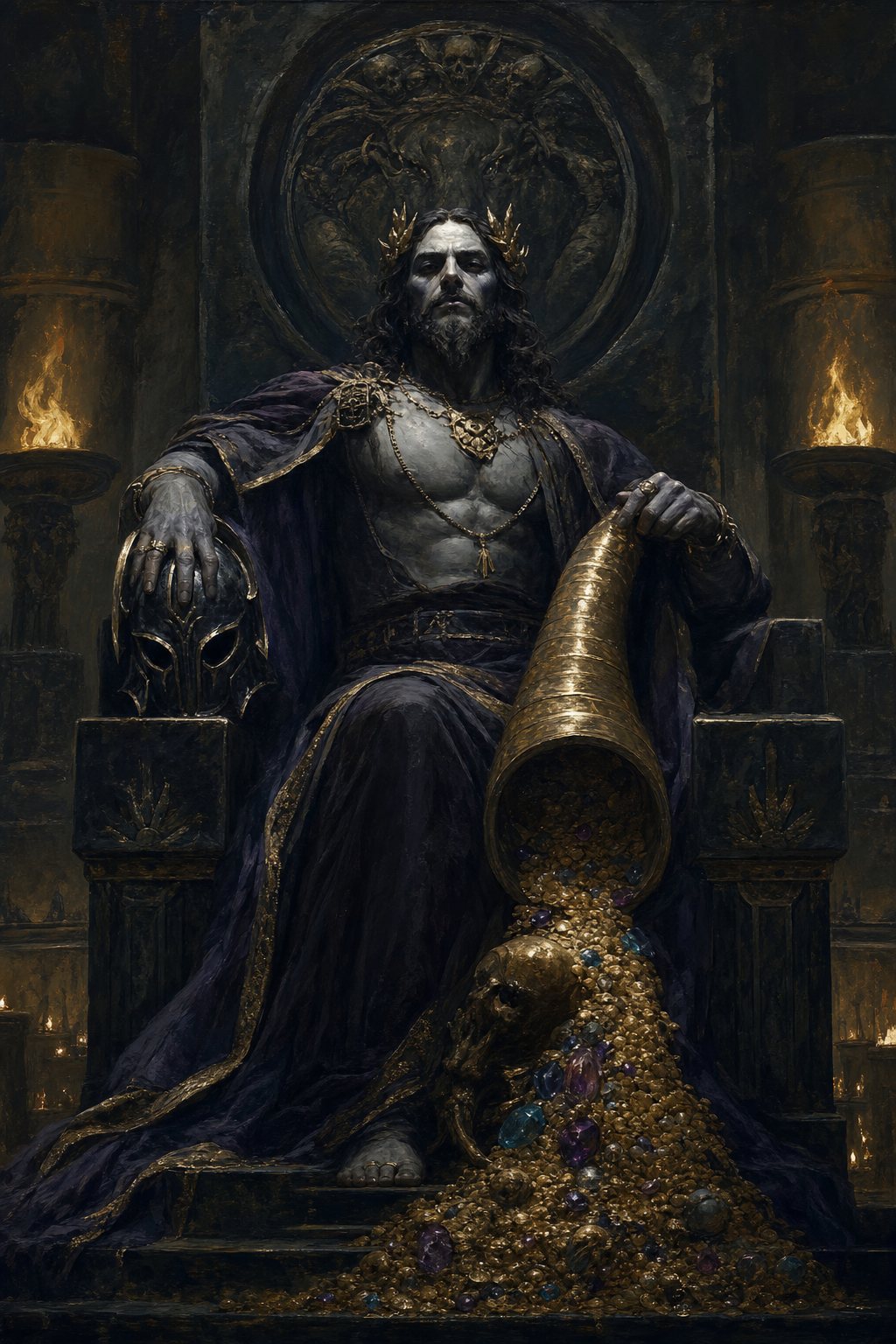
Hades
ᾍδης
Also known as: The Unseen Host, Lord of the Dead, Plouton (“Wealth-Giver”)
God of: the underworld, the dead, and the mineral wealth buried in the earth
Patron of: the dead and the rites owed to them
Character
Grim but scrupulously fair, Hades rules the dead not out of cruelty but out of an absolute commitment to order — every soul accounted for, every debt to the underworld eventually collected, no exceptions and remarkably few grudges.
Earning Favor
Hades favors those who honor the dead properly — correct funeral rites, unpaid debts settled before death, and respect for the underworld's laws. He resents nothing more than a soul that evades its rightful place through trickery or neglect on the part of the living.
Notable Relationships
- Siblings — Zeus, Poseidon, Demeter, Hestia, Hera
- Wife — Persephone, taken from the world above
- Servants — Charon the ferryman, Cerberus the gate-hound
Anecdote
The musician Orpheus descended alive into the underworld to beg for his dead wife Eurydice's return, and his grief-song moved even Hades to grant an exception: Eurydice could follow him back to the living world, on the single condition that Orpheus not look back at her until they both reached the surface. He looked back one step too soon, and lost her a second time — the underworld's one recorded act of mercy, undone not by Hades' cruelty but by a mortal's own doubt.
Emblem & Companions
The Helm of Darkness, which grants invisibility, and Cerberus, the three-headed hound who guards his gate against both escape and unlawful entry.
Real-World Sites
The Underworld itself has no earthly shrine of note — Hades was worshipped rarely and cautiously, mostly at chthonic sites like the Necromanteion of Acheron, where the living consulted the dead.
Appears In
- The Pomegranate DeadBriefs the party in his throne room, never naming the culprit; arrives late to congratulate them loudly so his wife gets the message, and owes them a favor if nobody says it aloud.