The Pythia's Sentence
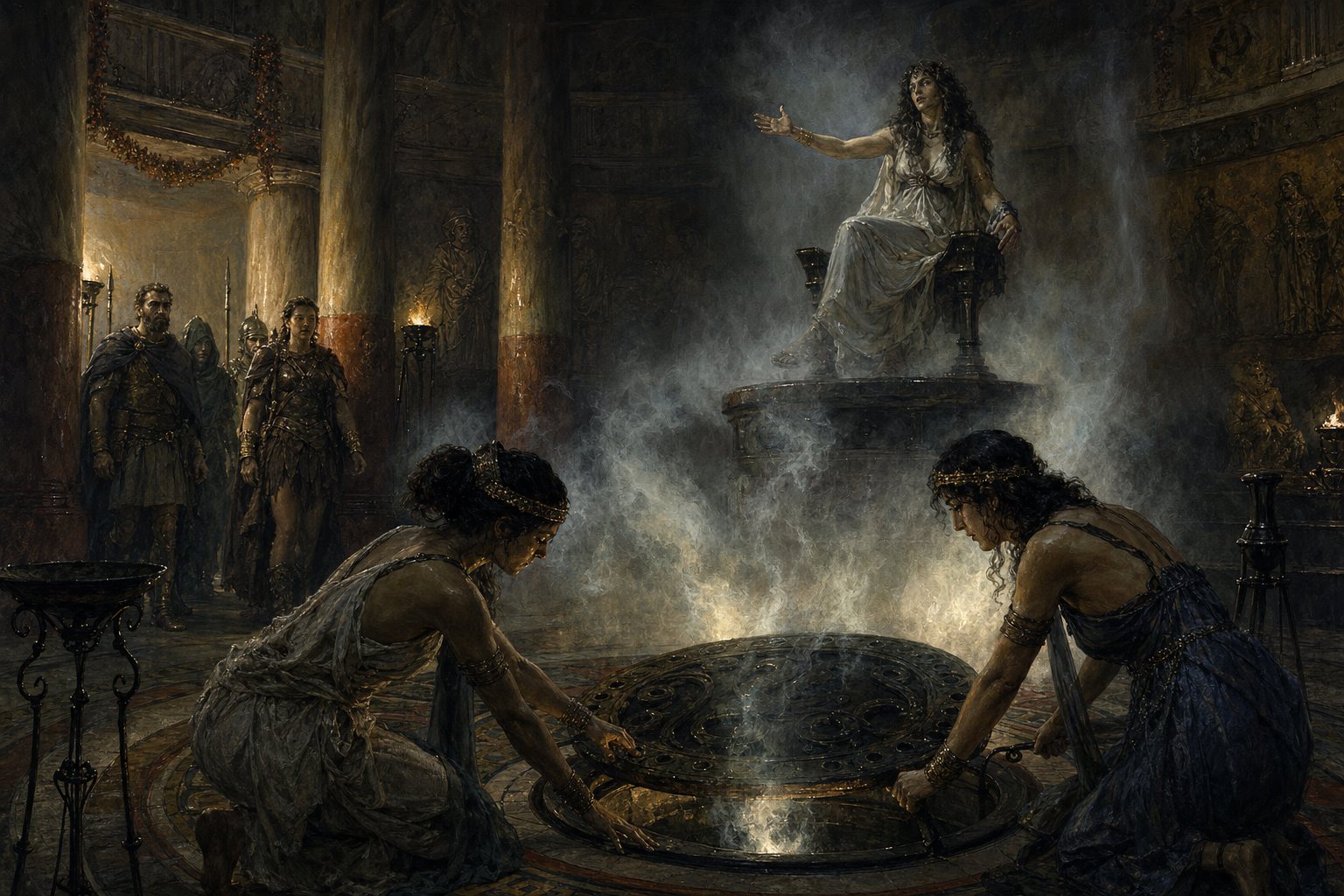
The Pythia does not look at you while she speaks, which is the worst of it. She looks at a bowl of water on a tripod and reports what is in the bowl in the tone of a woman reading a bill of lading.
"You will go down into the house of the bull-thing, and you will go carrying nothing that is owed to another, and you will come out having given up what you valued most on the way in. That is the sentence. That is not a curse; a curse would be shorter."
Then, with the temple-slave's knife, she cuts the cord of the thing you brought as your offering, and hands the empty cord back to you, and says: "Something down there will want to trade. It will ask for more than this."
Premise. The party did something — and this is the one Beginning where the players decide what, out loud, in the first two minutes — and this is the penance. They enter with full kit, minus one item each, under an explicit prophecy that somebody below will offer them a bargain. That prophecy is X06, and it is the only Beginning in the deck that tells the party their Resolution up front.
Starting State
- Full kit, minus one confiscated item per PC. The player chooses; it must be something they would miss. The Pythia keeps it as the offering. Write down what each PC gave up, because X06's ending asks whether they would give up something else, and the comparison is the scene.
- The sentence. Each PC also names, privately to you, the thing their character values most that is not an item — a name, an oath, a memory, a person's good opinion. That is what the power below will ask for. Do not tell the players you are doing this until the offer comes.
- Full HP and spell slots, and one blessing that is real: for the first hour in the maze, each PC has advantage on saves against being frightened. Say it is the Pythia's, and mean it.
- The crime. Ask the table what the party actually did. Take the first answer that makes everyone grin. It costs two minutes and it will pay for itself in every parley room for the rest of the session.
Opening Scene
The temple's lower cella: 30 ft × 25 ft, a tripod over a fissure with cold sweet air coming up through it, walls painted with a maze-figure that has been repainted so many times the plaster is an inch thick. The party stands on the plaster; the way down is the fissure, widened by generations into a stair.
No creatures, no violence, and no way to fail. This is a scene of pure ritual and information, and it should take ten minutes because it hands the party the most useful briefing in the deck.
The Pythia answers three questions honestly, in riddles that are not obscure. Have these ready:
- "What is down there?" — "A beast, its keepers, and a thing older than the keepers that the keepers feed. Do not confuse the three."
- "Will we come out?" — "Some doors open only from the inside. You will find one. Whether you use it is not in the bowl."
- "What will it ask for?" — "What you would not sell. That is how you will know it is the real offer and not a smaller one." This is the Whisper.
- "Who are we giving the offering to?" — She is honestly unsure, and says so, which is the most frightening thing she says all scene.
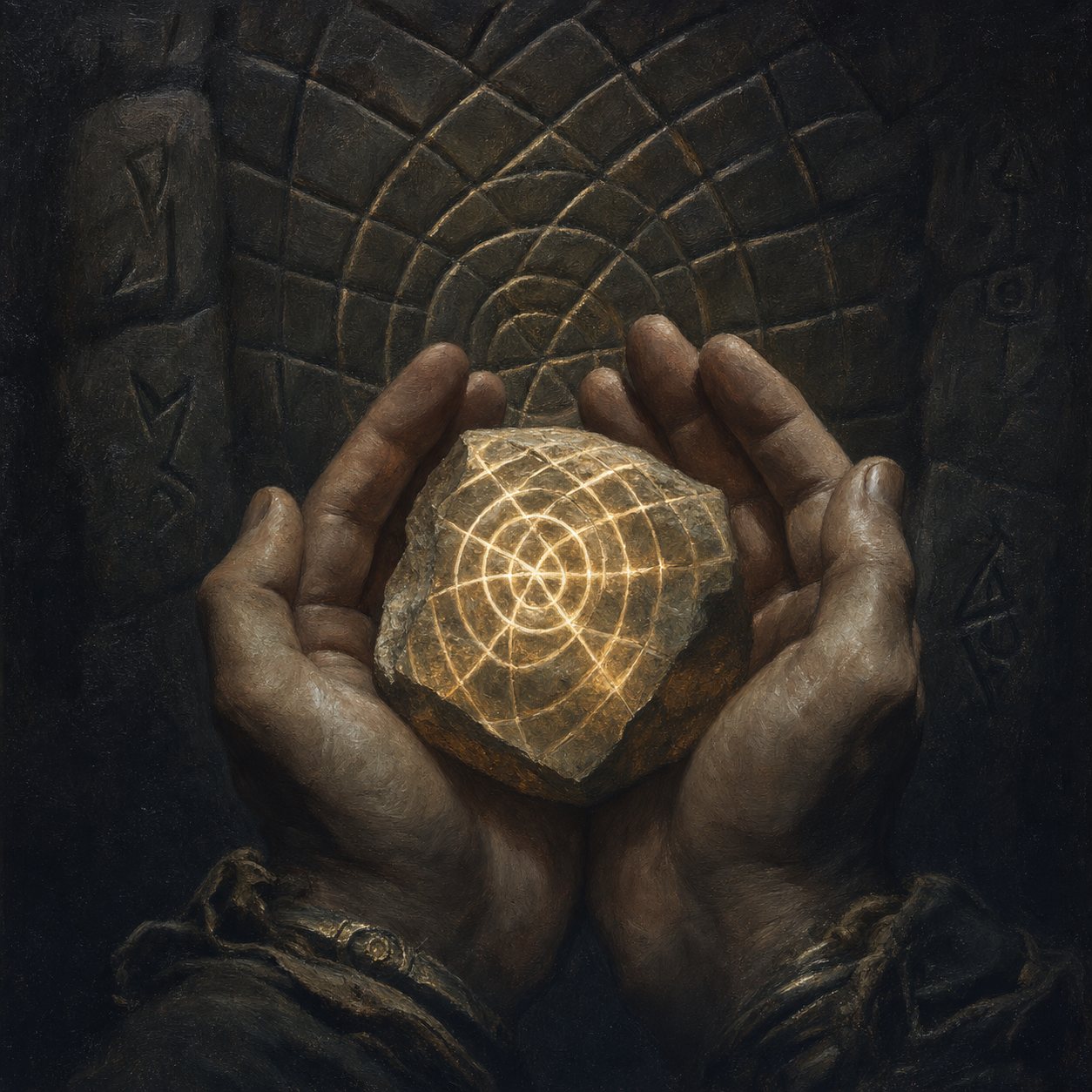
The maze-figure on the plaster. Religion DC 13: the outer rings match the Knossian palace figure, and the inner rings do not match anything. Someone has been repainting a map of a place that changes. History DC 15 adds that the innermost figure is older than Knossos, and is not a maze at all — it is a knot.
The offering-cord. Each PC keeps the cut cord of the thing they gave up. It is worthless, and it is the best handout in the deck. Give them the physical prop if you can be bothered: twelve inches of red thread each.
First Clue (Whisper tier)
The Pythia's third answer, and it is X06's Whisper: "It will ask for what you would not sell. That is how you will know it is the real offer and not a smaller one."
Everything in the maze that offers the party a deal for the rest of the session is now load-bearing. The lamia in R017 who wants a memory, the cyclops in R023 who wants a name, the naiad in R089 who wants a favour — all of them read as the bargain, and none of them are. That escalation is the entire pleasure of this Beginning, and it costs you nothing but a straight face.
Exits
Scaling — APL 6 / 12 / 15
| APL | Adjustment |
|---|---|
| 6 | The blessing lasts two hours instead of one. DCs −2 |
| 9 | As written |
| 12 | DCs +1. The Pythia answers two questions, not three |
| 15 | DCs +3, and the sentence has teeth: until the party completes a bargain below, each PC has disadvantage on death saving throws. The Pythia says so plainly. She is not sorry |
Coerced penance, confiscated property, and a prophecy the players cannot refuse. The premise leans on guilt, so keep the crime the players' own invention — it is much easier to enjoy a sentence you wrote yourself. If anyone would rather not have a "thing you value most" recorded for later, take an item instead; X06 works fine with a purely material trade.
- The only Beginning that names its Resolution up front, and it is stronger for it. Dramatic irony beats mystery here: the players know a bargain is coming, they do not know from whom or for what, and they spend nine rooms suspecting everything that talks.
- Let them invent the crime. "We stole a god's cattle," "we married the wrong person," "we burned a shrine by accident and then lied about it." Whatever they say, reference it three times during the session.
- Do not let a parley room become the bargain early. The lamia, the cyclops, and the naiad all offer small trades; the party should overpay one of them out of paranoia. That is the joke and it is worth setting up.
- The privately-named values are the ending. Collect them in the first ten minutes, write them where the players cannot see, and do not touch them again until X06. When the offer finally comes and it asks for exactly the thing a player wrote down two hours ago, that is the best moment this Beginning can produce.
- If you are running short, ask for the crime, take one item each, deliver the three answers, and go down in six minutes. Skip the plaster and the drain.